
If you come across an injured bird, these organizations are here to help:
Tucson Wildlife Center: (520) 290-9453
Arizona Raptor Center: 602-549-8482 or in S. AZ call (509) 995-6774
Southern Arizona Hummingbird Rescue: (520) 404-9949
For more resources, visit the Tucson Bird Alliance.
FOUND A BABY BIRD?
The best thing to do if you find a baby bird is to leave it alone. If the bird appears as though it has fallen from a nest, an attempt to locate the nest can be made, and the bird can be carefully returned. If the bird has feathers, it may be a fledged bird and a parent bird is probably close by. As long as the bird is in no danger from cats or other predators, it is best to watch the bird from a distance to see if a parent returns after an hour or so before determining that the bird needs human help.
Birds do not have a true sense of smell, so the myth that birds will reject a baby bird if touched by a human is not true. A baby bird that has been touched by a human, however, does make it easier for a predator (cat, raccoon, etc.) to find.
If a nest cannot be located or the bird is “rescued,” the first important step is to call a trained rehab individual to care for the bird. Second, provide warmth to the baby bird. A hot water bottle or low heating pad or even hot water in a glass bottle will do. Also, remember the Migratory Bird Treaty Act makes it illegal to handle most wild birds without a permit in North America so please contact a professional for assistance. For more information on the legal aspects, go here.
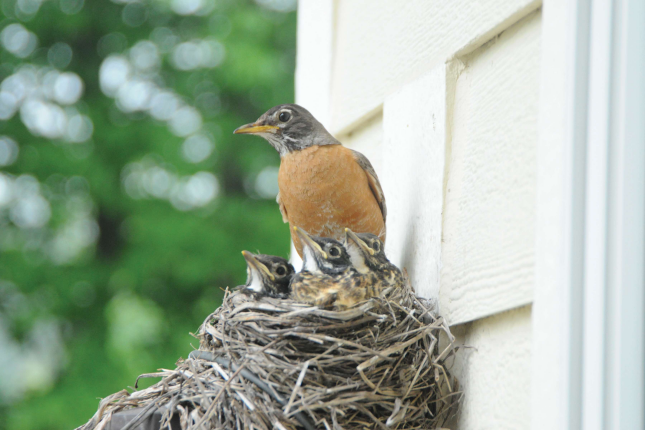
American Robin